How Fulvic Acid and PEMF Therapy Work Together at the Membrane Level

If you spend any time in the wellness world, you've probably noticed two ideas keep circling each other without ever quite shaking hands. On one side, there's fulvic acid — the trendy mineral compound people are putting in their water for energy, gut health, and "cellular" everything. On the other, there's PEMF therapy (pulsed electromagnetic field therapy) — the mats and coils that athletes, clinics, and even horse owners use to recover faster and feel better.
They get talked about in completely separate corners of the internet. But they're solving the same problem from opposite directions. This post connects the two — what each one actually does at the cellular level, what the research says, and why a growing number of practitioners use them together.
Everything starts at the cell membrane
Here's the unglamorous truth underneath almost every health symptom: if your cells aren't functioning well, nothing else upstream works the way it should. As Dr. Hoover puts it in the video, health is "won or lost at the cellular level" — improve the cell, and tissues, organs, and whole systems follow.
Every one of your cells carries a small electrical charge across its outer membrane. A healthy, energized cell holds a membrane voltage in the range of roughly 70 to 100 millivolts. That charge is what lets the cell pull nutrients and water in and push metabolic waste and toxins out. When that voltage sags, the gates effectively stick. Nutrients can't get in efficiently, waste backs up, and the cell — and eventually you — starts to feel it.
So the real question for any "cellular health" tool is simple: does it help the cell hold and use its charge? Fulvic acid and PEMF each answer yes, in their own way.
What fulvic acid does: the nutrient courier
Fulvic acid is a low-molecular-weight organic compound formed when plant matter is broken down by microorganisms in healthy soil. In the ground, these molecules grab onto trace minerals and elements so that plants can draw them up — and historically, so could we, by eating those plants. Modern commercial farming has largely stripped this activity out of the soil, which is a big part of why so much produce today is lower in nutrient density than it used to be.
What makes fulvic acid special is its size and charge. Because the molecule is so small and bioactive, research suggests it can pass through cellular membranes, which allows it to be properly absorbed and to boost the assimilation of other nutrients and supplements alongside it.3 Dr. Hoover's analogy is a good one: fulvic acid is the "baton runner" or courier that escorts minerals and water across the membrane and into the cell where they're actually useful.
A few things worth knowing:
- Fulvic vs. humic. You'll often see the two names together. They come from the same source (humate), but humic molecules are larger and work primarily in the gut, while fulvic molecules are smaller, more bioactive, and able to cross deeper — all the way to the cell and, the research suggests, even across the blood-brain barrier.
- The nutrients ride in charged form. Most of the minerals in fulvic acid are in an electrically charged (ionic) state, which is part of what makes them more bioavailable.7
- It supports the mitochondria. By improving mineral delivery and reducing oxidative stress, fulvic acid is associated with support for mitochondrial function — the energy engines inside your cells.1
Dr. Hoover calls the trap of ignoring cellular function "nutriceutically induced toxicity" — pouring supplement after supplement into the body while the cells themselves can't absorb or use them. Fix the cell first, and you often need far less of everything else.
What PEMF does: the charger
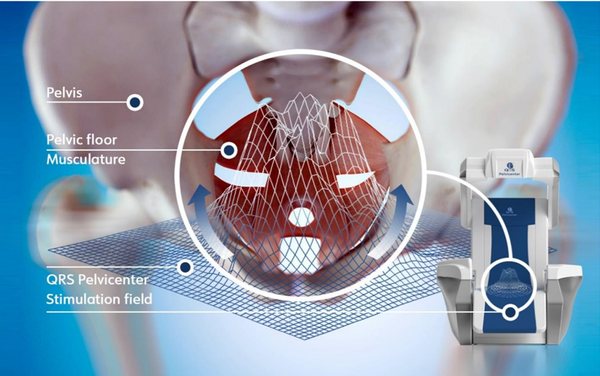
PEMF therapy delivers gentle, pulsing electromagnetic fields into the body through inductive coils. Where fulvic acid carries cargo through the membrane, PEMF works directly on the membrane's electrical state.
The mechanism is increasingly well documented. The cell membrane behaves like a tiny capacitor, and the electric-field component of a PEMF pulse can charge or discharge it — a process called dielectric polarization — generating an internal field that alters the cell's transmembrane potential.4 In plainer terms: PEMF helps nudge the cell's voltage back toward that healthy, energized range, which in turn influences voltage-gated ion channels and membrane permeability.4
Reviews of PEMF's cellular biology point to endogenous triggers like the resting membrane potential and voltage-gated calcium channels, with downstream effects that can dampen inflammatory signaling.5 That's why PEMF has the clinical track record it does, particularly for chronically inflamed joints, bone healing, and recovery.6
Why they belong together
Now put the two side by side and the synergy is obvious:
| Fulvic Acid | PEMF Therapy | |
|---|---|---|
| What it is | A tiny mineral-carrying molecule | A pulsing electromagnetic field |
| Main job | Carries nutrients & water across the membrane | Helps the membrane hold its charge |
| Think of it as | The delivery courier | The battery charger |
| Shared target | The electrical health of the cell membrane & mitochondria | |
PEMF helps restore the voltage that makes a cell ready to receive. Fulvic acid makes sure there's high-quality, bioavailable cargo — minerals, trace elements, hydration — ready to be carried in the moment those gates open. One charges the system; the other supplies it. Used together, they target the same cellular foundation from two complementary angles, which is exactly why practitioners like Dr. Hoover describe fulvic acid as a "phenomenal companion" to PEMF rather than a competing therapy.
What the research actually says
It's worth being honest about where the evidence is strong and where it's still emerging. Much of the human-specific research on fulvic acid is early, and larger clinical trials are still needed. That said, there are some genuinely interesting findings:
- Inflammation & metabolic health. A peer-reviewed review in the journal Molecules examined fulvic acid's therapeutic potential in chronic inflammatory conditions and diabetes, noting effects on gut flora, nutrient absorption, and inflammatory pathways.8
- Brain & cognitive research. A 2011 study in the Journal of Alzheimer's Disease found that fulvic acid inhibited the aggregation of tau protein — and even helped break down preformed tau fibrils — in vitro, pointing to possible future applications in neurodegenerative disease.2
- Skin health. A study in Clinical, Cosmetic and Investigative Dermatology reported that fulvic acid supplementation improved symptoms associated with eczema compared with other treatments.3
- PEMF's clinical base. PEMF has a deeper clinical literature, with mechanistic reviews tying its effects to membrane receptors, ion channels, and anti-inflammatory signaling in bone, cartilage, and joint tissue.5,6
The agricultural science behind fulvic acid — how it boosts nutrient uptake in plants by increasing membrane permeability — is actually where the deepest body of research lives, and it's the same property that makes it interesting for human cells.3
Is fulvic acid safe? Dosage & what to expect
Fulvic acid is generally well tolerated, and a comprehensive toxicological assessment has been published supporting its safety at appropriate doses.2 As always: choose a high-quality, purified product free from contaminants, and talk to your healthcare provider if you're pregnant, nursing, or managing a medical condition.
A few practical notes drawn from the conversation in the video and common dosing guidance:
- Typical dose: around 1–2 ml of liquid fulvic acid per day. Dr. Hoover suggests starting with roughly 20 drops (about 1 ml) in the morning and another ~20 drops mid-afternoon.
- Taste: light and slightly mineral/salty — barely noticeable in a glass of water.
- What people tend to notice first: more sustained energy (without a caffeine-style spike and crash), better mental clarity, and over time, improvements in skin and hair as hydration improves.
- Pets: fulvic acid is popular for dogs and horses too — a few drops per 5 lb of body weight in the water bowl is a commonly cited starting point. (Check with your vet.)
Try it yourself
A fulvic supplement built for cellular health
If you want to pair fulvic acid with your PEMF routine, this is the liquid fulvic formula we recommend — easy to add a couple of dropper-pulls to your water each day.
The foundational takeaway
The wellness world loves a magic bullet, and there isn't one. But there is a foundation, and it's electrical. Your cells need to hold a charge, and they need quality materials to work with. PEMF helps with the first; fulvic acid helps with the second. Neither is exotic — both are just supporting the basic machinery your body was always designed to run on.
As Dr. Hoover frames it, this isn't about chasing the next symptom or the next supplement. It's about giving your cells what they need to function, every day, so that everything built on top of them has a fighting chance. That's the connection worth remembering: charge the cell, supply the cell, and let the body do the rest.
Sources & further reading
- Cleveland Clinic & cellular-health overviews on fulvic acid, mineral transport, and mitochondrial support. Cleveland Clinic: Fulvic Acid.
- Cornejo A, et al. "Fulvic Acid Inhibits Aggregation and Promotes Disassembly of Tau Fibrils Associated with Alzheimer's Disease." Journal of Alzheimer's Disease, 2011;27(1):143–153. PubMed. See also Dai C, et al. "A Comprehensive Toxicological Assessment of Fulvic Acid." Evid Based Complement Alternat Med, 2020. PubMed.
- Overview of fulvic acid's nutrient absorption, membrane permeability, and eczema/dermatology research. Dr. Axe: Fulvic Acid Benefits (summarizing the Clinical, Cosmetic and Investigative Dermatology eczema study).
- "Interaction of pulsed low frequency electromagnetic field (PEMF) with mitochondria." Scientific Reports, 2026. Nature.com.
- "Coupling of pulsed electromagnetic fields (PEMF) therapy to molecular grounds of the cell." Am J Transl Res, 2018. PubMed.
- "Pulsed Electromagnetic Field Stimulation of Bone Healing and Joint Preservation: Cellular Mechanisms of Skeletal Response." PMC.
- "Fulvic Acid: Benefits, Side Effects, Foods, Uses" — on ionic mineral form and bioavailability. MedicineNet.
- Winkler J, Ghosh S. "Therapeutic Potential of Fulvic Acid in Chronic Inflammatory Diseases and Diabetes." Journal of Diabetes Research / Molecules. PMC.
This article is for educational purposes only and is not medical advice. Fulvic acid and PEMF are not intended to diagnose, treat, cure, or prevent any disease. Consult a qualified healthcare provider before starting any new supplement or therapy.