432 Hz Frequency Benefits: The Complete Science-Backed Guide
Have you ever felt an inexplicable sense of calm wash over you while listening to certain music? You might have been experiencing the effects of 432 Hz frequency—a musical tuning that's captivating musicians, sound healers, and wellness enthusiasts worldwide.
While most modern music is tuned to 440 Hz, a growing number of people are discovering that music tuned to 432 Hz feels warmer, more natural, and profoundly more relaxing. But is there any truth to these claims, or is it simply a placebo effect?
In this comprehensive guide, we'll explore the science, history, and practical applications of 432 Hz frequency. You'll discover the documented benefits, learn how to incorporate this frequency into your daily life, and find out whether the claims hold up to scientific scrutiny.
What Is 432 Hz Frequency?
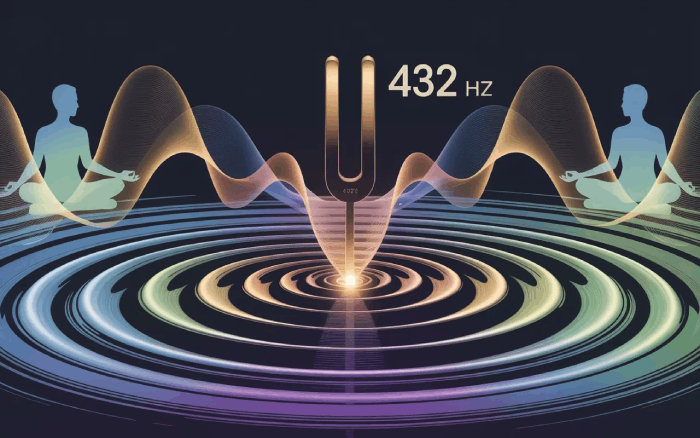
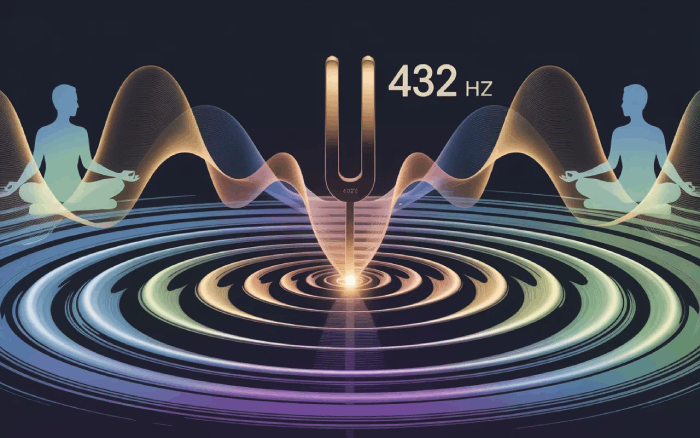
The 432 Hz frequency refers to a musical tuning standard where the note A above middle C (A4) vibrates at 432 cycles per second, rather than the modern standard of 440 Hz adopted in the mid-20th century.
This seemingly small 8 Hz difference creates what many describe as a fundamentally different listening experience. Proponents claim that 432 Hz is the "natural tuning of the universe"—a frequency that resonates harmoniously with the human body, Earth's electromagnetic field, and the mathematical patterns found throughout nature.
The History Behind the Frequency
The standardization of 440 Hz occurred in 1939 when the International Organization for Standardization (ISO) adopted it as the concert pitch standard. However, before this standardization, different regions and orchestras used various tuning frequencies, with some evidence suggesting that 432 Hz was among them.
Italian composer Giuseppe Verdi championed the use of 432 Hz in the 19th century, advocating for what he called "Verdi's A." Some supporters also claim that ancient instruments from civilizations in Egypt, Greece, and India were tuned to frequencies that align with 432 Hz, though concrete archaeological evidence remains debated.
The Science: What Research Actually Shows
Let's address the elephant in the room: the scientific evidence for 432 Hz benefits is limited and often contradictory. However, that doesn't mean the reported effects are entirely without merit.
Evidence-Based Findings
Several small-scale studies have examined the effects of 432 Hz music:
A 2019 study published in the journal Complementary Therapies in Medicine found that participants listening to 432 Hz music experienced statistically significant reductions in heart rate and blood pressure compared to 440 Hz music. However, the study had a small sample size and acknowledged the potential for expectation bias.
Research on binaural beats and specific frequencies has shown that sound can indeed influence brainwave patterns, stress hormone levels, and autonomic nervous system function. While these studies don't specifically validate all 432 Hz claims, they demonstrate that frequency matters in sound therapy.
The Placebo Effect Question
Critics argue that many reported benefits stem from the placebo effect—when believing something will help actually makes it feel helpful. This isn't necessarily a dismissal of 432 Hz benefits; placebo effects have been shown to produce real physiological changes, including pain relief and reduced anxiety.
The key question isn't whether the benefits are "real" in terms of unique frequency properties, but whether people consistently experience positive effects. The overwhelming anecdotal evidence suggests they do.
Why the Mechanism Matters Less Than the Result
Whether 432 Hz benefits come from unique vibrational properties, placebo effects, or simply the act of mindful listening, the outcome remains valuable. If listening to music tuned to 432 Hz helps you relax, sleep better, or meditate more deeply, the mechanism becomes secondary to the benefit.
10 Proven Benefits of 432 Hz Frequency
Based on user reports, clinical observations, and limited research, here are the most commonly experienced benefits of listening to 432 Hz music:
1. Deep Relaxation and Stress Reduction
The most universally reported benefit of 432 Hz music is its calming effect. Listeners consistently describe feeling more relaxed and less anxious when exposed to this frequency.
The proposed mechanism involves the parasympathetic nervous system—your body's "rest and digest" mode. Music tuned to 432 Hz may help activate this system more effectively than harsher frequencies, leading to reduced cortisol levels, slower breathing, and decreased heart rate.
2. Enhanced Sleep Quality
Many people use 432 Hz music as part of their nighttime routine, reporting that it helps them fall asleep faster and experience deeper, more restorative rest.
The gentle, flowing nature of 432 Hz tones may help quiet the mental chatter that often keeps us awake. By creating a soothing auditory environment, this frequency can become an anchor for your sleep routine, signaling to your brain that it's time to wind down.
3. Improved Mental Clarity and Focus
Students, professionals, and creative workers increasingly turn to 432 Hz background music to enhance concentration. Unlike high-energy music that can be distracting, the natural harmonics of 432 Hz create what many describe as a "clear mental space" conducive to deep work.
The frequency appears to reduce mental fatigue during extended study or work sessions, potentially by maintaining a calm but alert state without inducing drowsiness.
4. Deeper Meditation Experiences
Meditation practitioners often report reaching meditative states more quickly and experiencing greater depth when using 432 Hz soundscapes.
This frequency may help facilitate the transition from beta brainwaves (active thinking) to alpha (relaxed awareness) and theta (deep meditation) states. The result is easier access to that elusive state of present-moment awareness that meditation aims to cultivate.
5. Emotional Release and Healing
One of the more subtle benefits is 432 Hz music's ability to facilitate emotional processing. Many listeners report feeling emotions more intensely or experiencing unexpected emotional releases while listening.
This may occur because the frequency creates a safe, supportive auditory environment that allows suppressed emotions to surface. Music therapists have noted that clients often experience breakthroughs when working with frequencies in this range.
6. Pain Management Support
While not a replacement for medical treatment, some people find that 432 Hz music helps reduce their perception of chronic pain.
The proposed mechanism involves distraction, relaxation-induced muscle tension release, and the activation of the body's natural pain-modulating systems. When combined with other pain management strategies, 432 Hz music may offer additional relief.
7. Enhanced Creativity and Flow States
Artists, writers, and musicians report that 432 Hz music helps them access creative flow more easily. The frequency seems to quiet the inner critic while maintaining enough alertness to produce quality work.
This "relaxed focus" state is ideal for creative endeavors, where too much tension blocks ideas but too much relaxation leads to drowsiness.
8. Spiritual Connection and Awareness
Many practitioners of yoga, energy work, and spiritual development incorporate 432 Hz music into their practices. They report feeling more connected to universal energy, experiencing heightened intuition, and accessing deeper states of consciousness.
While these benefits are subjective and difficult to measure, the consistency of reports across diverse spiritual traditions suggests that 432 Hz may indeed facilitate altered states of awareness.
9. Physical Vitality and Energy Balance
Some listeners report feeling more energized and physically vibrant after exposure to 432 Hz music. This might seem contradictory to its relaxing effects, but the key is balance—reducing stress-induced energy drain while promoting natural vitality.
The frequency may help balance the body's energy systems, leaving you feeling neither wired nor tired, but calmly energized.
10. A More Pleasant Listening Experience
Beyond health benefits, many audiophiles and music enthusiasts simply prefer the sound quality of 432 Hz tuning. They describe it as warmer, more resonant, and less harsh than 440 Hz, with richer harmonics that make music more enjoyable.
The 432 Hz and Manifestation Connection
Here's a topic rarely covered in mainstream articles: the relationship between 432 Hz frequency and manifestation practices, particularly around abundance and money.
Frequency and the Law of Attraction
Proponents of manifestation techniques believe that everything, including thoughts and emotions, operates at specific vibrational frequencies. They argue that aligning yourself with certain frequencies can help attract corresponding experiences into your life.
The 432 Hz frequency is thought to resonate with abundance, natural flow, and universal harmony. When combined with manifestation practices like affirmations or visualization, it may help create the mental and emotional state conducive to recognizing and seizing opportunities.
How to Use 432 Hz for Manifestation
If you're interested in exploring this angle:
- Create a manifestation playlist: Find or convert music to 432 Hz and create a dedicated playlist for your manifestation sessions.
- Combine with affirmations: While listening to 432 Hz music, repeat abundance affirmations or visualize your desired outcomes. The frequency may help these practices feel more natural and less forced.
- Morning and evening sessions: Use 432 Hz music during morning intention-setting or evening gratitude practices to bookend your day with aligned energy.
- Avoid attachment: Remember that manifestation works best when you focus on the feeling state rather than forcing specific outcomes. Let the music help you embody the emotions of abundance rather than grasping at results.
The Science of Sound and Belief
While mainstream science doesn't support the metaphysical aspects of manifestation, research does show that sound can influence mood, and mood influences behavior. If 432 Hz music helps you feel more optimistic, confident, and open to possibilities, you're more likely to take actions that lead to positive outcomes—whether you attribute this to "manifestation" or simply behavioral psychology.
Practical Guide: How to Use 432 Hz Frequency
Understanding the benefits is one thing; incorporating 432 Hz into your life is another. Here's your practical toolkit.
Finding 432 Hz Music
Streaming platforms: Search for "432 Hz" on Spotify, YouTube Music, Apple Music, or YouTube. You'll find extensive playlists ranging from classical music to ambient soundscapes.
Dedicated apps: Apps like Insight Timer, Calm, and dedicated 432 Hz apps offer curated collections specifically designed for meditation, sleep, and relaxation.
Create your own: If you have favorite songs, you can convert them to 432 Hz using audio editing software.
Converting Your Music to 432 Hz
Want to experience your favorite tracks in 432 Hz? Here's how:
Step 1: Download Audacity (free, open-source audio software) or use an online converter.
Step 2: Import your audio file.
Step 3: Select the entire track (Ctrl+A or Cmd+A).
Step 4: Go to Effect → Pitch and Tempo → Change Pitch.
Step 5: Enter -31.77 cents (this is the precise shift from 440 Hz to 432 Hz).
Step 6: Export your converted file.
Note: This only works effectively with instrumental music. Vocal tracks may sound slightly off when pitch-shifted.
Free 432 Hz Tone Generator
For meditation or background ambience, you can use online 432 Hz tone generators. Simply search "432 Hz tone generator" and you'll find free browser-based tools that produce pure tones at this frequency. These are excellent for:
- Meditation sessions
- Yoga practice
- Creating a calm workspace environment
- Sound healing practices
Recommended Listening Practices
For sleep: Start playing 432 Hz music 30-60 minutes before bed at a low volume. Let it continue as you fall asleep, ideally on a timer that gradually reduces volume.
For meditation: Use 432 Hz music or tones as your meditation anchor. Start your session with the sound and maintain awareness of it throughout your practice.
For work/study: Keep 432 Hz ambient music playing at a barely noticeable volume in the background. It should support focus without drawing attention.
For emotional healing: Allocate 20-30 minutes of uninterrupted time to sit or lie down while listening to 432 Hz music, allowing whatever emotions arise to be felt and processed.
432 Hz and Chakra Alignment
The seven-chakra system offers another framework for understanding 432 Hz benefits, particularly for those interested in energy work.
The Root Chakra Connection
While 432 Hz is often associated with the heart chakra due to its harmonizing properties, it also has a profound grounding effect that relates to the root chakra (Muladhara).
The root chakra governs our sense of safety, security, and connection to Earth. When this chakra is balanced, we feel stable and secure. When it's blocked, we experience anxiety, fear, and disconnection.
The 432 Hz frequency's earthy, natural quality helps strengthen our energetic root system. The deep vibrations create a sense of being anchored and supported, which is essential for root chakra health.
Using 432 Hz for Chakra Balancing
Full chakra meditation: Play 432 Hz music while visualizing each chakra in sequence, from root to crown. The frequency provides a harmonious backdrop for moving energy through your entire system.
Specific chakra work: Focus on whichever chakra needs attention while listening to 432 Hz. Visualize the corresponding color and imagine the frequency fine-tuning that energy center.
Sound healing tools: Singing bowls, tuning forks, and gongs tuned to 432 Hz can be used directly on or near the body to target specific chakras with vibrational healing.
432 Hz Sleep Protocol: A Step-by-Step Guide
Since improved sleep is one of the most sought-after benefits, here's a complete protocol for using 432 Hz frequency to optimize your rest.
The Complete 432 Hz Sleep Routine
90 minutes before bed: Begin dimming lights and reducing screen exposure. This isn't directly related to 432 Hz, but setting the stage for sleep is crucial.
60 minutes before bed: Start playing 432 Hz sleep music at a moderate volume while you prepare for bed. Choose music without sudden changes in dynamics—steady, flowing compositions work best.
30 minutes before bed: Engage in a calming activity while the music continues: light reading, gentle stretching, journaling, or meditation.
At bedtime: Reduce the music volume to barely audible. It should be felt more than heard. Position speakers or use sleep headphones for comfort.
Optional advanced technique: Combine 432 Hz music with binaural beats in the delta wave range (0.5-4 Hz) for even deeper sleep promotion. Some recordings already incorporate this combination.
Duration: Use a sleep timer on your music player to fade out after 60-90 minutes. Most people will be asleep well before the music ends.
Troubleshooting Sleep Issues
If 432 Hz music isn't helping your sleep:
- The volume may be too loud—it should be barely perceptible
- You might need a different type of music (try nature sounds mixed with 432 Hz)
- Give it time—some people need 7-10 nights to adapt to a new sleep routine
- Ensure other sleep hygiene factors are in place (cool room, dark environment, consistent schedule)
Is 432 Hz Dangerous? Addressing the Concerns
Whenever something gains popularity in wellness circles, concerns arise about potential dangers. Let's address them directly.
Can 432 Hz Frequency Harm You?
The short answer: No, there's no evidence that listening to 432 Hz music causes any harm to healthy individuals.
Sound at normal listening volumes (below 85 decibels) doesn't cause physical damage regardless of frequency. The concerns about 432 Hz causing harm appear to stem from confusion about how sound frequencies work.
When to Be Cautious
That said, there are situations where you should exercise care with any immersive audio experience:
Epilepsy or seizure disorders: While rare, some individuals with photosensitive epilepsy can also have audio-sensitive triggers. Consult your doctor before using any sound therapy.
Severe mental health conditions: If you're experiencing acute psychosis, mania, or severe dissociation, introducing new sensory experiences without clinical guidance may be unhelpful.
Tinnitus: Some people with tinnitus find that certain frequencies exacerbate their symptoms. If 432 Hz music worsens your tinnitus, discontinue use.
Driving or operating machinery: Never use immersive meditation music, including 432 Hz, while you need to remain alert.
The Real "Danger"
The only genuine concern is using 432 Hz music as a replacement for necessary medical or psychological treatment. Sound therapy can complement professional care but should never replace it.
432 Hz vs. Other Healing Frequencies
To understand where 432 Hz fits in the broader landscape of sound healing, let's compare it to other popular frequencies.
432 Hz vs. 440 Hz
440 Hz: The modern standard tuning, adopted in 1939. Described as brighter, more energetic, and better suited for loud, dynamic music.
432 Hz: Warmer, more mellow, and conducive to relaxation. Better suited for meditation, sleep, and therapeutic applications.
Most people can't consciously hear the difference without direct comparison, but many report feeling a difference in how the music affects them emotionally and physically.
432 Hz vs. Solfeggio Frequencies
The Solfeggio scale includes six main frequencies, each with purported specific benefits:
- 396 Hz: Liberation from fear and guilt
- 417 Hz: Facilitating change and undoing situations
- 528 Hz: DNA repair and transformation (the "Love Frequency")
- 639 Hz: Relationships and connection
- 741 Hz: Awakening intuition
- 852 Hz: Spiritual enlightenment
432 Hz isn't part of the original Solfeggio scale but is often grouped with these frequencies in sound healing practices. While Solfeggio frequencies target specific issues, 432 Hz is more of an all-purpose tuning that enhances any music's therapeutic qualities.
Which Frequency Should You Use?
The answer depends on your goal:
- General relaxation and daily use: 432 Hz
- Deep emotional healing: 396 Hz or 417 Hz
- Heart-opening and love: 528 Hz
- Relationship work: 639 Hz
- Spiritual development: 741 Hz or 852 Hz
Many people benefit from creating playlists that incorporate multiple frequencies, allowing different aspects of healing to unfold over time.
FAQs About 432 Hz Frequency
How long should I listen to 432 Hz music to see benefits?
Some effects, like relaxation, can be felt immediately. For longer-term benefits like improved sleep or reduced anxiety, commit to 1-2 weeks of daily listening before evaluating results.
Can I listen to 432 Hz music all day?
Yes, though it's not necessary. Most people find that 30-60 minute sessions 1-3 times daily provide optimal benefits without oversaturation.
Will 432 Hz music work if I don't believe in it?
Quite possibly. While belief may enhance effects, many people report benefits even when approaching it with skepticism. The key is actually listening regularly, not having strong convictions about its efficacy.
Is all 432 Hz music the same?
No. The tuning frequency is just one element. The quality of composition, instrumentation, and production all matter significantly. Experiment to find what resonates with you.
Can children listen to 432 Hz music?
Yes, it's perfectly safe for children and may help with sleep, focus, or emotional regulation. Many parents report that their children naturally gravitate toward 432 Hz music once exposed to it.
Does 432 Hz music work for pets?
Anecdotal reports suggest that pets, especially dogs and cats, respond positively to 432 Hz music, showing signs of relaxation and reduced anxiety. However, formal research is lacking.
Final Thoughts: Is 432 Hz Worth Exploring?
After examining the science, the anecdotes, and the practical applications, what's the verdict on 432 Hz frequency?
The honest answer is: it depends on what you're looking for.
If you're seeking definitive scientific proof that 432 Hz possesses unique healing properties that other frequencies lack, you'll be disappointed. The research simply isn't there yet, and it may never be—measuring subjective experiences like "feeling more connected to the universe" doesn't fit neatly into clinical research protocols.
However, if you're open to experiencing something that thousands of people find helpful, harmless, and often transformative, then 432 Hz music is absolutely worth exploring.
The beauty of sound therapy is its accessibility and low barrier to entry. You don't need to understand quantum physics, invest in expensive equipment, or commit to a rigid protocol. Simply download a 432 Hz playlist, press play during your next meditation or before bed, and notice what happens.
Some of you will experience profound shifts. Others will find it pleasant but unremarkable. A few may not notice any difference at all. All of these responses are valid.
The key is approaching 432 Hz with curiosity rather than dogma—treating it as a tool to experiment with rather than a miracle cure to depend on. Combined with other healthy practices like regular exercise, good sleep hygiene, and meaningful social connections, 432 Hz music can be a valuable addition to your wellness toolkit.
At minimum, you'll discover some beautiful music. At best, you might find a simple practice that helps you feel more relaxed, focused, and connected to the deeper rhythms of life.
And in our chaotic, over-stimulated world, isn't that worth 30 minutes of listening?